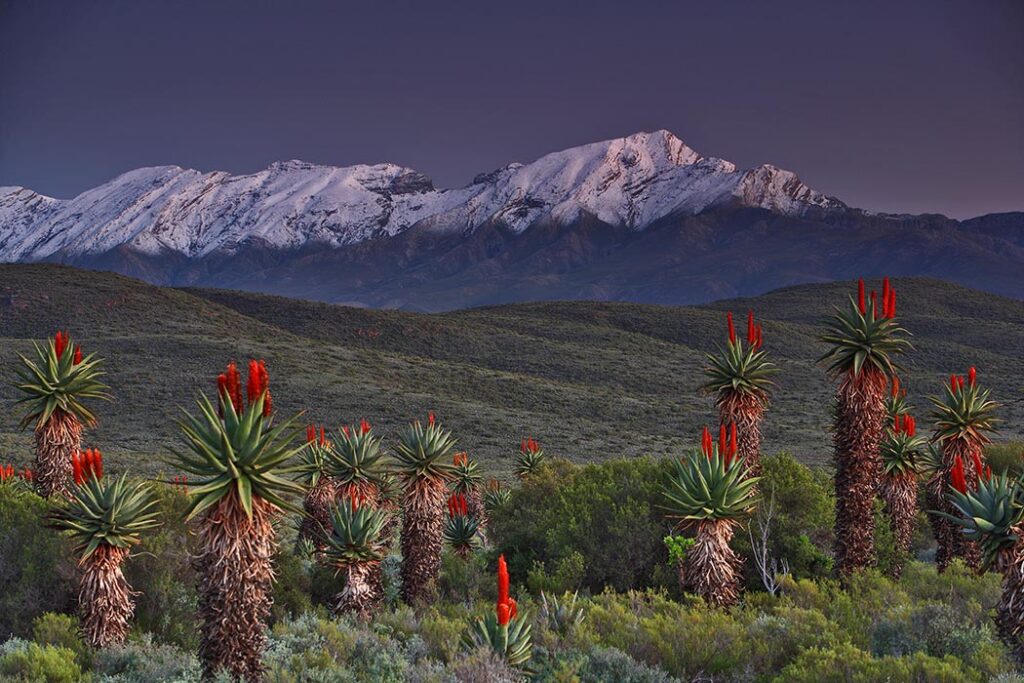
GORA WILDERNESS
CORES & CORRIDORS
linking existing protected areas to ensure ecological connectivity for biodiversity and ecological processes.
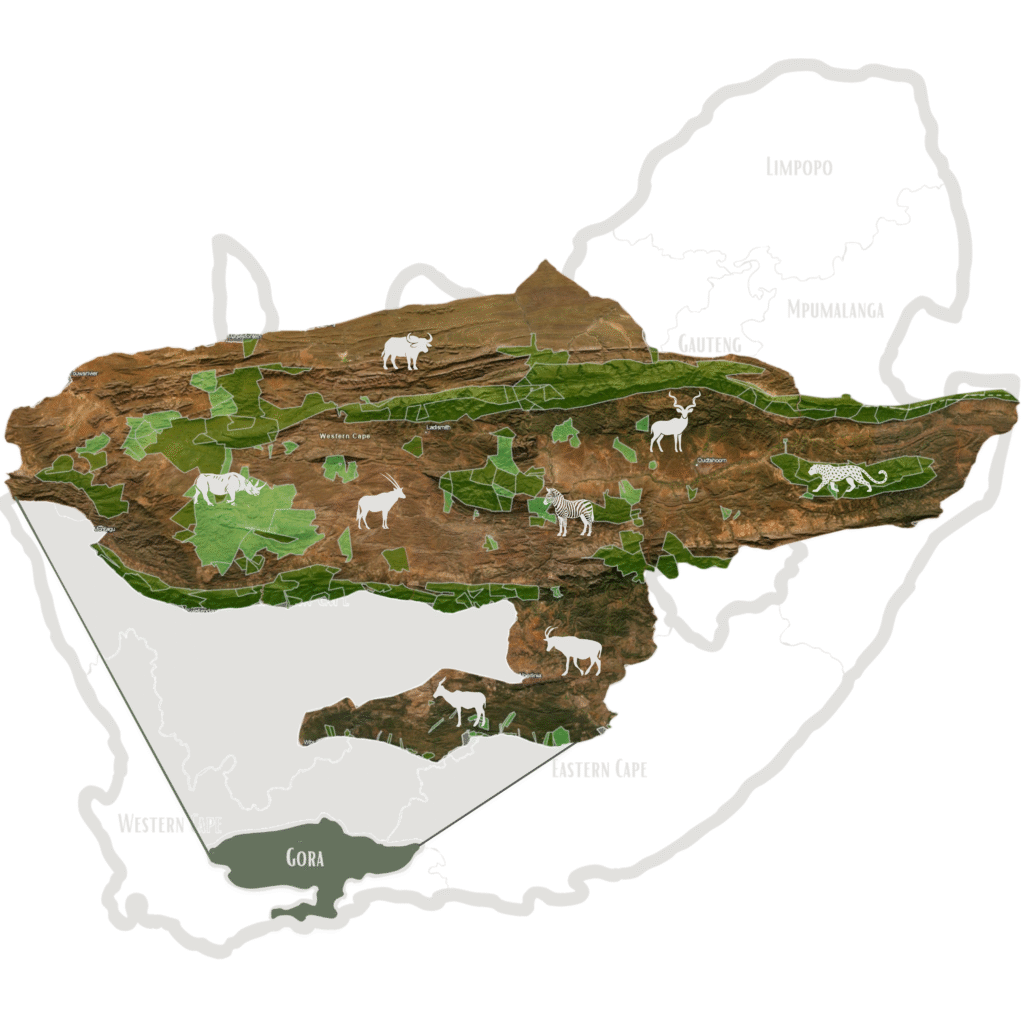
Reconnecting a fragmented landscape along ancient elephant pathways. Once, the great wilderness of the Western Cape stretched uninterrupted across mountains, valleys, rivers and coastal plains. Wildlife moved freely through this landscape, following ancient pathways shaped by the seasons, the availability of water and the rhythms of nature.
Over generations, these natural connections were fragmented by fences, agricultural expansion and human development, restricting wildlife movement and disrupting the ecological processes that once sustained this remarkable region.
canca coastal corridor
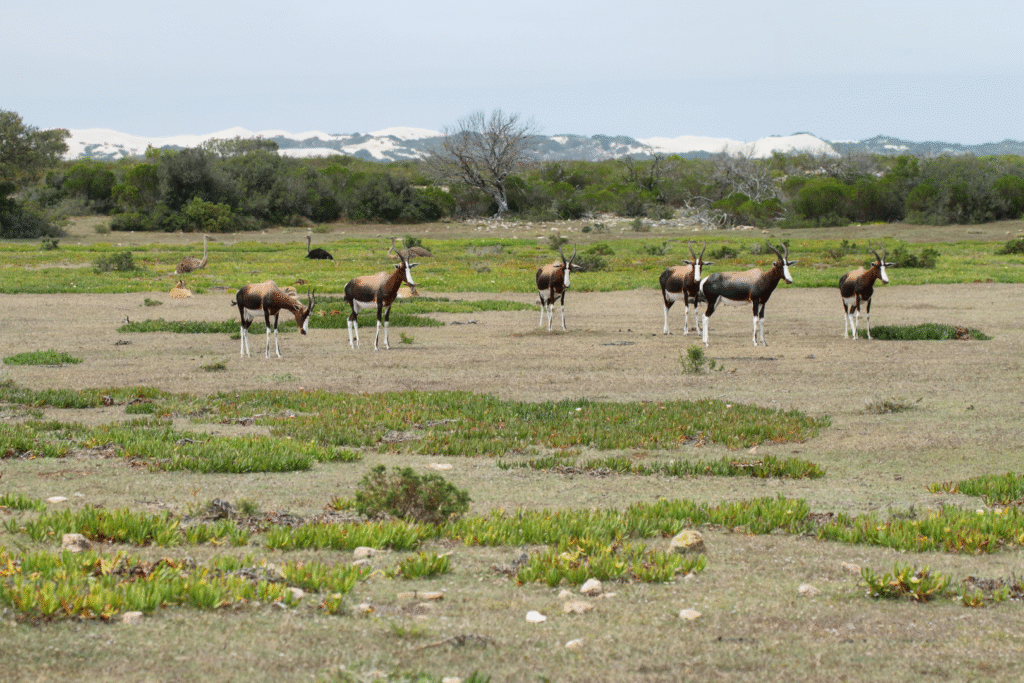
Stretching across the rolling limestone hills, ancient sand plains and coastal landscapes of the southern Cape, the Canca Coastal Corridor forms part of an extraordinary natural mosaic where rich coastal fynbos, thicket and forest converge. Shaped by ancient geological processes, this landscape supports remarkable botanical diversity, including rare and endemic plant species found nowhere else on Earth. Representing some of the last remaining wild stretches of Cape coastline, the Canca Coastal Corridor stretches from the mouth of the Breede River at Witsand in the west to the mouth of the Gouritz River at Gouritsmond in the east, across 160,000 ha. It includes the Gourikwa Coastal Nature Reserve as the largest protected area in the corridor currently.
Reach out to us for a conversation about developing the Canca Coastal Corridor and expanding the Gora Wilderness Conservation Area.
Unique species that currently occur in this region is the endemic bontebok Damaliscus pygargus pygargus, eland Tragelaphus oryx, and a small population of Cape mountain zebra Equus zebra zebra that has been reintroduced into Gourika Coastal Nature Reserve. Most of the mammal species that formerly occurred in this region remain absent and awaiting the development of the corridor for reintroduction.
Eleven unique vegetation units have been described, two of which are listed as Critically Endangered and six listed as Endangered, all with their unique suite of endemic species.
gouritz river corridor
Following the Gouritz River from its mouth into the Indian Ocean in the south to the Gouritz Gorge in the north where the river flows through the Outeniqua Mountains from the Little Karoo. The Gouritz River Corridor, with its riverine woodland and many blooming aloes, is characterised by deep river valleys and gently undulating country. When the first Portuguese seafarers passed the Gouritz River in 1488 they found the area with such large herds of cattle and sheep belonging to the Khoekhoe pastoralist, that they named the river Rio dos Vaqueiros or “river of cowboys and cattle herds”.
Reach out to us for a conversation about developing the Gouritz River Corridor and expanding the Gora Wilderness Conservation Area.
Along with large herds of indigenous African cattle and sheep breeds, this region harboured large herds of indigenous wildlife with many farm names still confessing to the hippopotamus, buffalo, eland, red hartebeest and elephant herds that once thrived here. Not many protected areas have been established within the Gouritz River Corridor, although many private game reserves have been developed in the region in recent years. Within these non-proclaimed areas small populations of antelope, giraffe, zebra, hippopotamus, buffalo, white rhinoceros and elephant have been established each within their own fenced-off private reserves.
The flora of the region is equally varied, with Acacia woodland along the rivers, forests and thickets on the hill slopes and grassland and fynbos on the gently sloping undulating hills.
gamka core
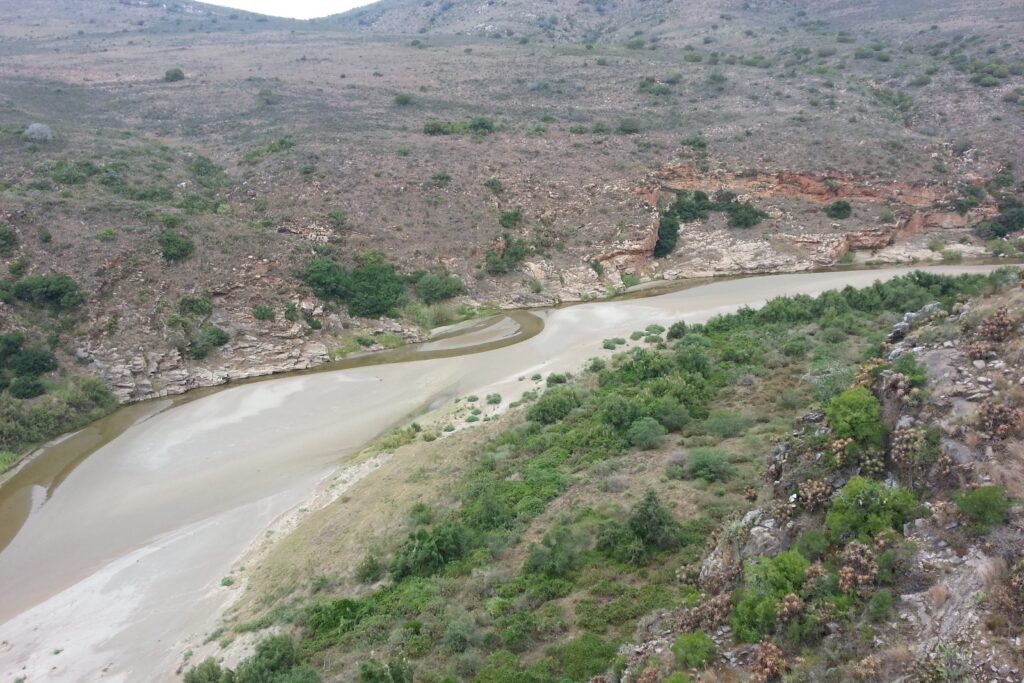
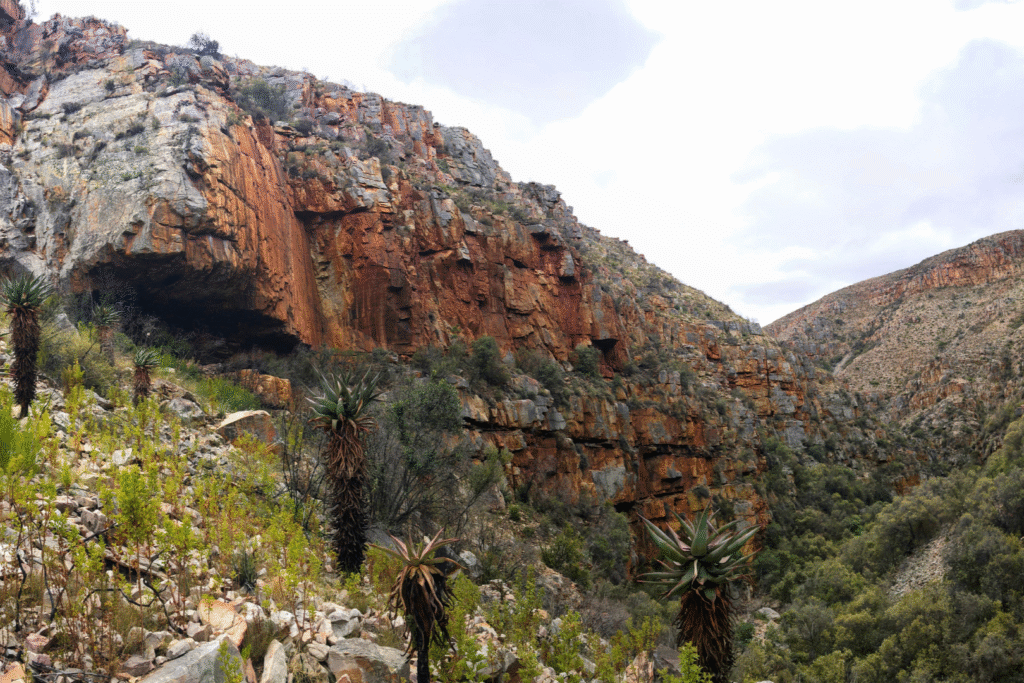
Deep within the rugged heart of the Little Karoo, the Gamka Core encompasses a remarkable wilderness of ancient mountains, dramatic river gorges, expansive valleys and arid plains. Sculpted over time by the Groot, Gamka and Olifants Rivers as the converge to form the Gouritz River, this landscape forms part of a rich ecological transition where three globally recognised Biodiversity Hotspots meet. Characterised by dense subtropical thickets, succulent-rich shrublands and riverine Acacia woodland, the Gamka Core represents the core of the Gora Wilderness Conservation Area. It encompasses the Gamkaberg Cluster consisting of Gamkaberg, Fontein, Heimersrivier, Rooiberg, Groenefontein, Kwessie, Triangle, Vaalhoek, Paardenberg and Rooiolifantskloof reserves that cover an area of roughly 80,000 ha (198,000 acre).
Reach out to us for a conversation about opportunities to expand the Gamka Core and expanding the Gora Wilderness Conservation Area.
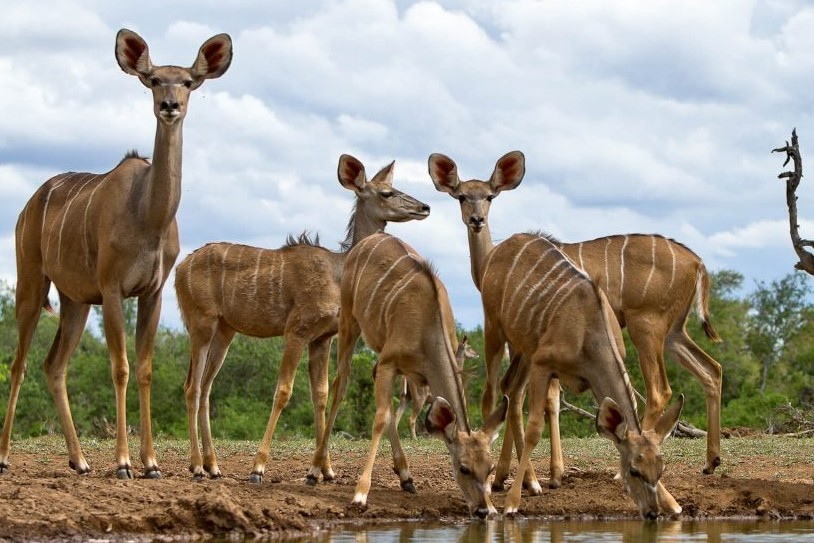
Gamkaberg served as one of only three original refuge sites where Cape mountain zebra’s persisted, and reintroduced herds of red hartebeest and eland joined them along with greater kudu that recolonised the area in the past three decades. Much of the original fauna that inhabited the region is still absent, including Cape buffalo, hippopotamus, black rhinoceros, elephant and lion, after whom the Gamkaberg and the Gamka Core is named. In addition to mammals the area had a breeding colony of endangered Cape vultures until 1984 when the population became extinct due to secondary poisoning from a laced carcass left by a nearby farmer for leopard and jackal.
In terms of flora, the Gamkaberg and its environs is a melting pot of different vegetation communities. Here three globally recognised hotspots, the Cape Floristic Region, the Succulent Karoo and the Maputaland-Pondoland-Albany hotspot, meet at the convergence of temperate and subtropical climes.
KANNA corridor
Stretching westward from the Gamka Core across the plains and rugged undulating country of the western Little Karoo towards the Anysberg Core lies the Kanna Corridor. The corridor, along with the Kannaland region where it is located, is named after kanna skeletonfig (Mesembryanthemum tortuosum), a small succulent plant with significant medicinal and cultural value. The corridor follows the Groot and Touws Rivers upstream linking two of the greatest wilderness areas in the Western Cape. Carved through a landscape of mudstone hills, shale ridges and expansive quartz plains, this remarkable river system forms a natural ecological corridor through one of the Cape’s most distinctive transitional landscapes.
Reach out to us for a conversation about developing the Kanna Corridor and expanding the Gora Wilderness Conservation Area.
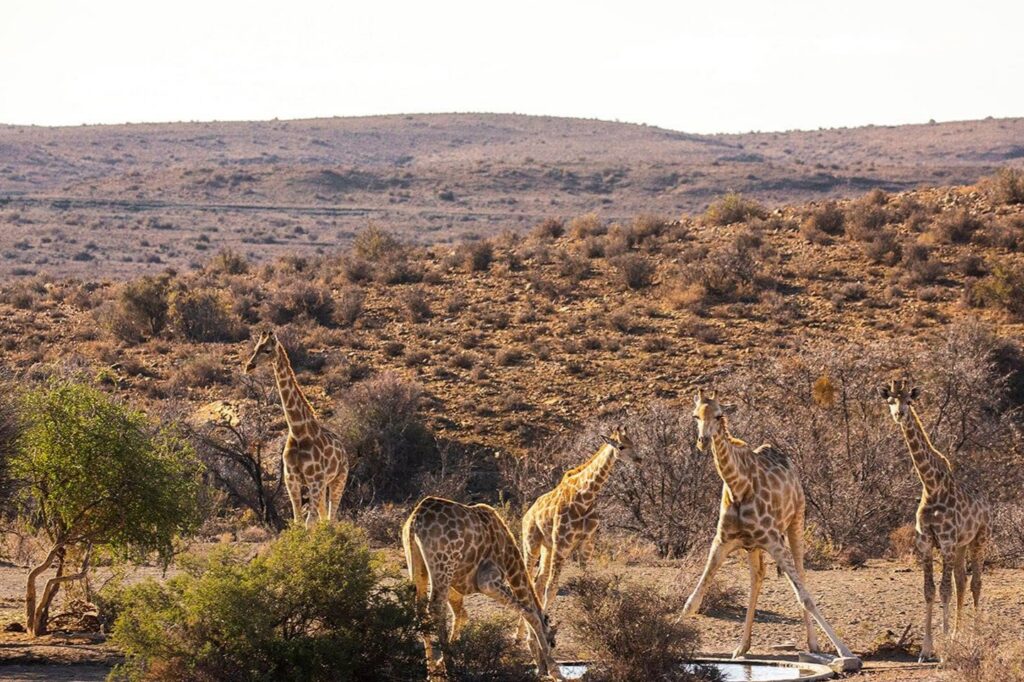
The Kanna Corridor still harbour large numbers of springbok and gemsbok, and in the past two decades private game reserves have increased in the area along with re-introduced populations of wildlife, including large populations of eland, Cape mountain zebra and giraffe. Many species are yet to be re-introduced to the Kanna Corridor.
Located in the heart of the Succulent Karoo Biodiversity Hotspot, the flora of the region is equally varied with around 3,200 plant species, 400 of which are endemic to the region. In addition to the Succulent Karoo vegetation, arid Thicket also occur in the form of extensive arid spekboomveld.
anysberg core
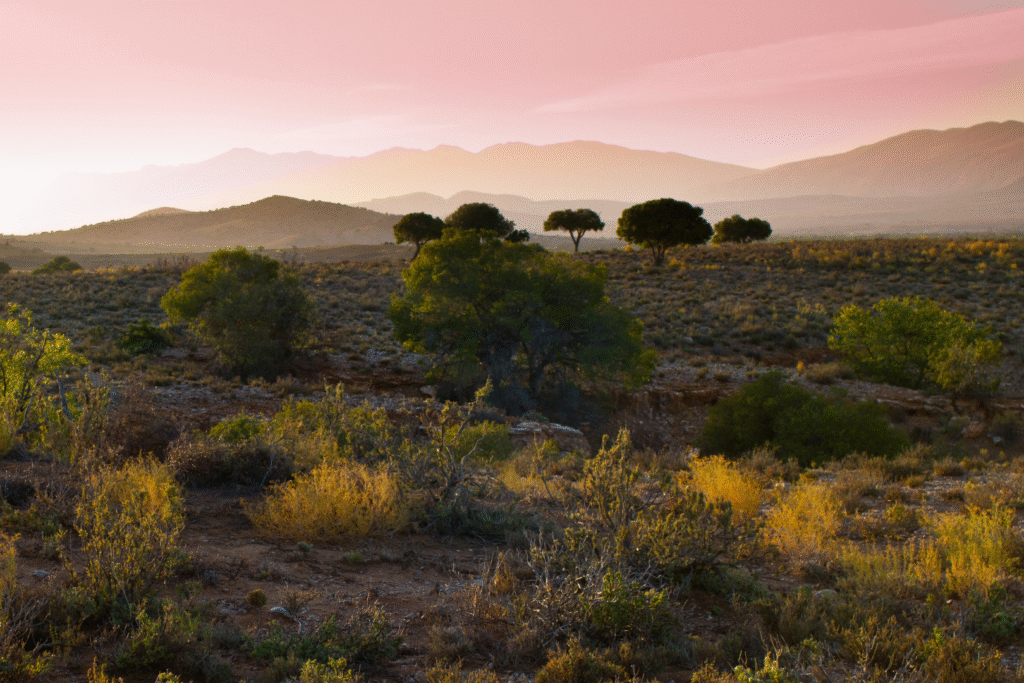
Rising from the vast, semi-arid plains of the western Little Karoo, the Anysberg Core encompasses an extraordinary wilderness of rugged Cape Fold Mountains, expansive valleys, ancient river systems and sweeping Karoo landscapes. Dominated by the Anysberg and Warmwaterberg mountain ranges, this remarkable region is dominated by the ecotone between the Cape Floristic Region and the Succulent Karoo biodiversity hotspots. At the heart of this wilderness lies a significant network of established conservation areas, anchored by Anysberg Nature Reserve, Sanbona Wildlife Reserve, and Mont Eco Game Reserve. Together, these landscapes represent an exceptional foundation for landscape-scale conservation in the Little Karoo.
Reach out to us for a conversation about expanding the Anysberg Core and expanding the Gora Wilderness Conservation Area.
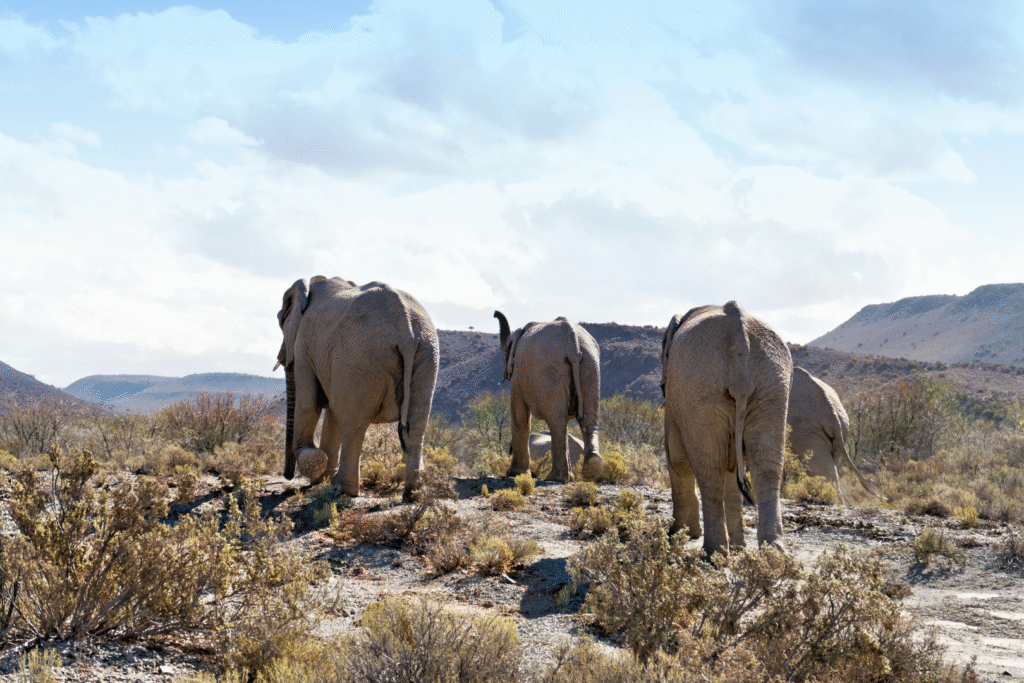
The region represents an important refuge for indigenous wildlife and represents some of the most intact faunal representations of what the landscape once harboured in terms of species. Sanbona has pioneered the reintroduction of species once lost from much of the Little Karoo, including elephant, lion, cheetah, and desert black rhinoceros. These species contribute to the restoration of ecological processes that historically shaped the region’s natural landscapes.
The Anysberg Core encompasses a remarkable diversity of vegetation communities, where mountain fynbos, renosterveld, succulent karoo and arid thicket converge across dramatic changes in altitude, geology and rainfall. Its sandstone mountain slopes, fertile shale valleys and quartz-rich plains support an exceptional variety of indigenous plants, including rare and endemic succulents, geophytes and drought-adapted shrubs.
buffels-dwyka corridor
Stretching northeastward from the Anysberg Core across the vast, semi-arid plains north of the Swartberg Mountains, the Buffels-Dwyka Corridor encompasses an extraordinary landscape of ancient shale hills, sweeping Karoo valleys, rugged ridgelines and seasonal river systems. Extending across the Buffels River in the west towards the Dwyka River and the historic town of Prince Albert in the east, this remarkable wilderness forms a natural ecological passage along the northern foothills of the Swartberg, where the Cape Fold Mountains gradually give way to the expansive interior of the Great Karoo. Situated at the transition between the Succulent Karoo and Nama Karoo biomes, the Buffels-Dwyka Corridor represents an important opportunity to reconnect fragmented habitats across one of the Western Cape’s most distinctive arid landscapes once the stage for the iconic Karoo springbok migrations.
Reach out to us for a conversation about developing the Buffels-Dwyka Corridor and expanding the Gora Wilderness Conservation Area.
Historically, the landscape supported extensive populations of indigenous plains game, including quagga, springbok, gemsbok, blesbok, red hartebeest, black wildebeest, eland and other antelope, alongside all of Africa’s most iconic predators. The many seasonal rivers that crisscross the Karoo plains also served a vital veins of habitat for elephants, black rhinoceros, Cape buffalo and hippopotamus. Today, the remaining natural habitats continue to support characteristic Karoo wildlife, including smaller antelope, reptiles, raptors and numerous endemic and range-restricted bird species.
The Buffels-Dwyka Corridor encompasses a remarkable transition between the Succulent Karoo and Nama Karoo biomes, where drought-adapted dwarf shrublands, succulent-rich vegetation, seasonal grasslands and scattered riverine woodlands form a diverse mosaic of arid ecosystems.
cango corridor
Stretching eastward from the Gamka Core towards the Kammanassie Core, the Cango Corridor follows the southern foothills and plains of the majestic Swartberg Mountains through the sweeping valleys, rugged ridgelines and fertile plains of the central Little Karoo. Encompassing the remarkable Cango Valley and the landscapes surrounding Oudtshoorn, this corridor forms a natural ecological passage between two of the region’s most important mountain wilderness areas.
Reach out to us for a conversation about developing the Cango Corridor and expanding the Gora Wilderness Conservation Area.
Historically, Cango Corridor supported a remarkable assemblage of large African mammals, including elephant, Cape buffalo, black rhinoceros, eland, red hartebeest and Cape mountain zebra, alongside predators such as lion, leopard and spotted hyaena. Today, surviving populations of indigenous antelope, smaller mammals and elusive predators persist across the surrounding mountain landscapes, while fragmented natural habitats offer opportunities for wildlife recovery and the restoration of historical movement pathways.
The Cango Corridor encompasses a remarkable transition between mountain fynbos, succulent karoo, renosterveld and subtropical thicket, where the diverse geology and climatic conditions of the Little Karoo support an exceptional variety of indigenous vegetation. Its rocky mountain slopes harbour fynbos communities, while the lower valleys and foothills support drought-adapted shrubs, aloes, spekboom-rich valley bushveld and succulent vegetation. Along seasonal rivers and sheltered drainage lines, riverine woodlands provide important refuge for wildlife and ecological connectivity through the semi-arid landscape.
kammanassie core
Rising dramatically from the riverine woodlands of the eastern Little Karoo, the Kammanassie Core encompasses an extraordinary mountain wilderness of rugged sandstone peaks, deep valleys, sheltered gorges and ancient river systems. Centred around the majestic Kammanassie Mountains, between the Swartberg and Outeniqua ranges, this isolated mountain massif forms a remarkable ecological island where the Cape Floristic Region, Succulent Karoo and subtropical thicket ecosystems converge. At the heart of this wilderness lies the Kammanassie Nature Reserve, an established conservation stronghold encompassing approximately 27,000 hectares of formally protected mountain wilderness within a broader conservation landscape of nearly 50,000 hectares. Managed by CapeNature, the reserve protects one of only three original surviving populations of Cape mountain zebra, representing a genetically distinct lineage of exceptional conservation significance.
Reach out to us for a conversation about expanding the Kammanassie Core and expanding the Gora Wilderness Conservation Area.
Of particular conservation significance is the Cape mountain zebra, whose surviving Kammanassie population represents one of the last original genetic lineages of this once severely threatened species. The mountains also provide refuge for leopard, kudu, grey rhebok, mountain reedbuck, klipspringer and numerous smaller mammals, alongside a remarkable diversity of reptiles, birds and other indigenous wildlife. Despite the current diversity, much of the historically occurring species remain absent from the region and are awaiting the expansion of the core and corridors to be reintroduced.
The Kammanassie Mountains represent one of the most remarkable centres of biodiversity in the eastern Little Karoo, where mountain fynbos, succulent karoo and subtropical thicket converge across dramatic changes in altitude, geology and rainfall. Its rugged sandstone slopes support a rich diversity of proteas, ericas, restios and other fynbos species, while sheltered valleys and lower foothills harbour spekboom-rich thicket, succulent shrublands and patches of indigenous forest. Among its botanical treasures are rare and endemic species found nowhere else on Earth, including the Kammanassie conebush and several highly localised ericas.